
RE-BRAND, ASST. CREATIVE DIRECTION, DESIGN & DEVELOPMENT
Cloverleaf: Evolving an AI brand around what makes work human.
Cloverleaf was evolving.
What began as a workplace assessment platform was becoming an AI-powered coaching experience, delivering personalized guidance based on behavioral data, workplace context, and the relationships people navigate every day.
The brand needed to evolve with it.
As Design Lead, I helped translate that shift into a new identity, website, and scalable visual system designed to make sophisticated technology feel distinctly human.
Design Lead: Asst. Creative direction, brand design, web design, UI/UX design, AI systems
ROLE
Adobe Creative Suite · Figma · WordPress · Elementor · Claude
TOOLS
TIMELINE
Phase 1: 2025
Phase 2: 2026



The Brand Shift
-
Cloverleaf sits at an unusual intersection: behavioral psychology, workplace relationships, coaching, and AI.
That's powerful, but it can also get abstract quickly.
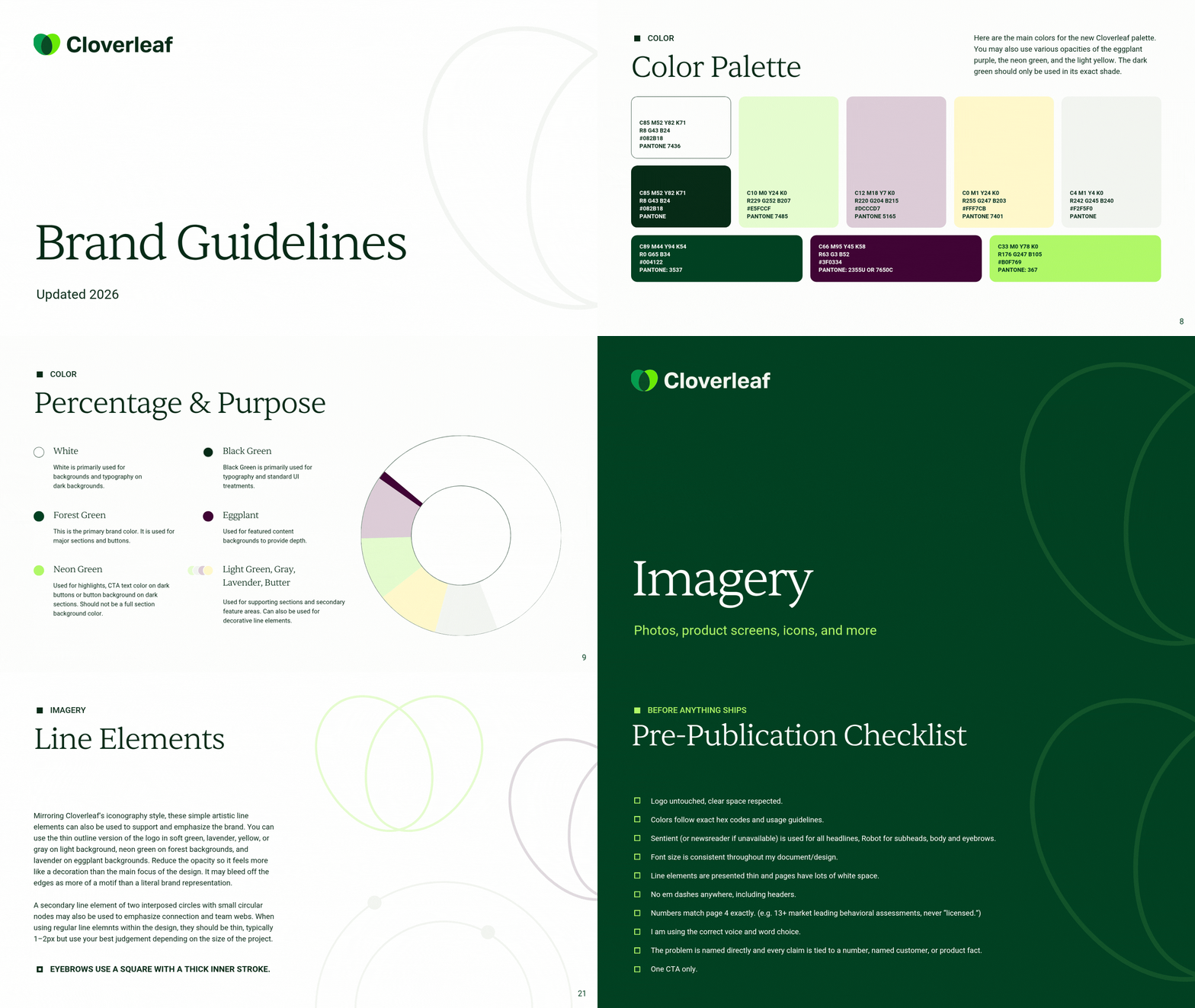
The challenge was to create a brand capable of communicating increasingly sophisticated technology without looking like every other AI company. It needed to feel modern and intelligent, but still warm, approachable, and grounded in real people.
That tension became the foundation for the new visual direction.
-
Item descriptionThe visual identity needed to work harder, too.
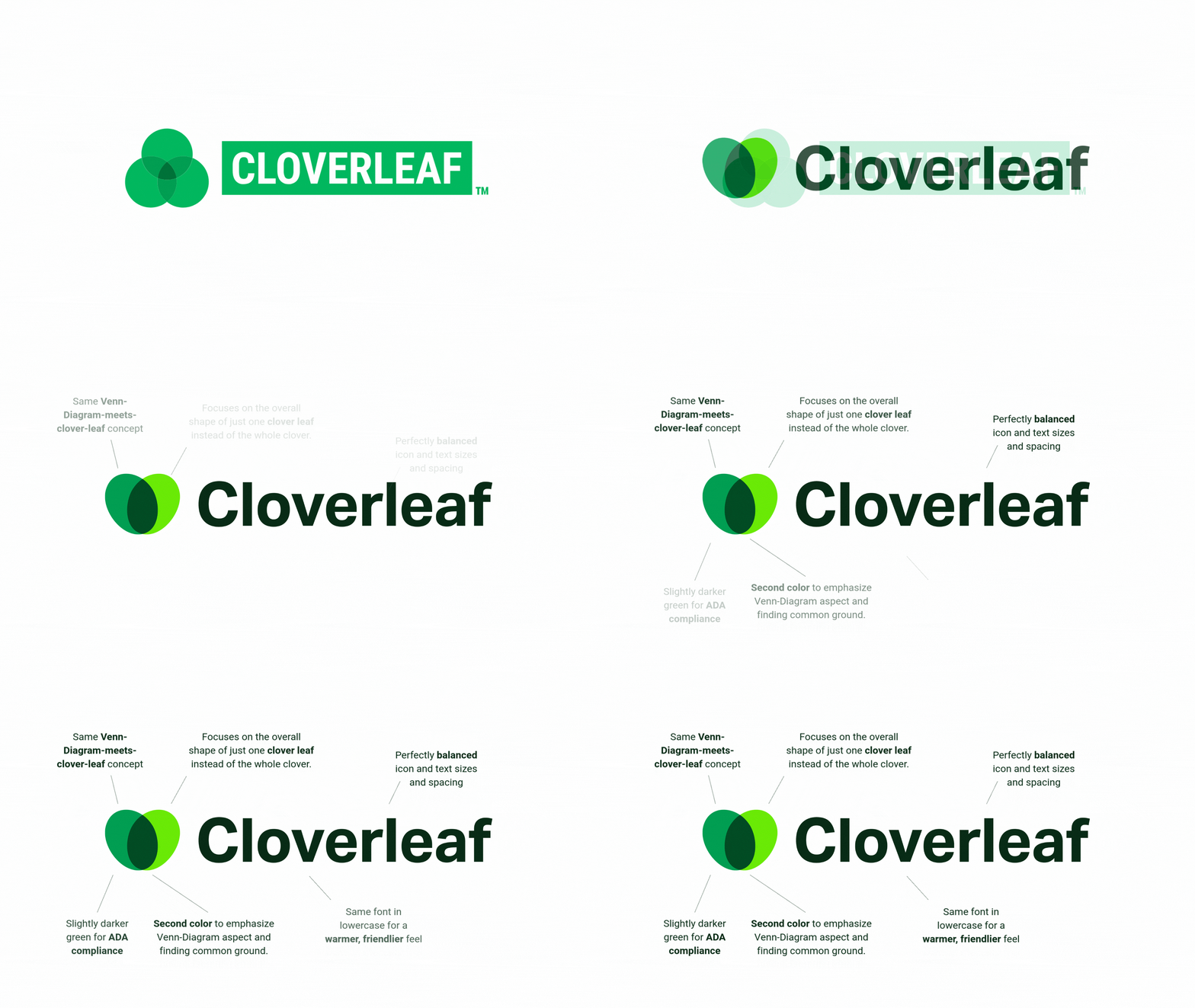
I helped evolve Cloverleaf's identity around a simplified mark and a visual language designed to flex between product storytelling, thought leadership, campaigns, events, sales materials, and everyday marketing needs.
The system expanded across typography, color, illustration, photography, layout, and digital experiences.
Rather than creating a rigid set of rules, I focused on building recognizable ingredients that could be remixed without losing the brand.
Consistency without sameness.
The Website
CREDITS
Creative Consulting and Direction: Kate McCullough
Marketing Director: Shelby Bolinger
Contracted Web Development Team for initial phase: D-Studios
-
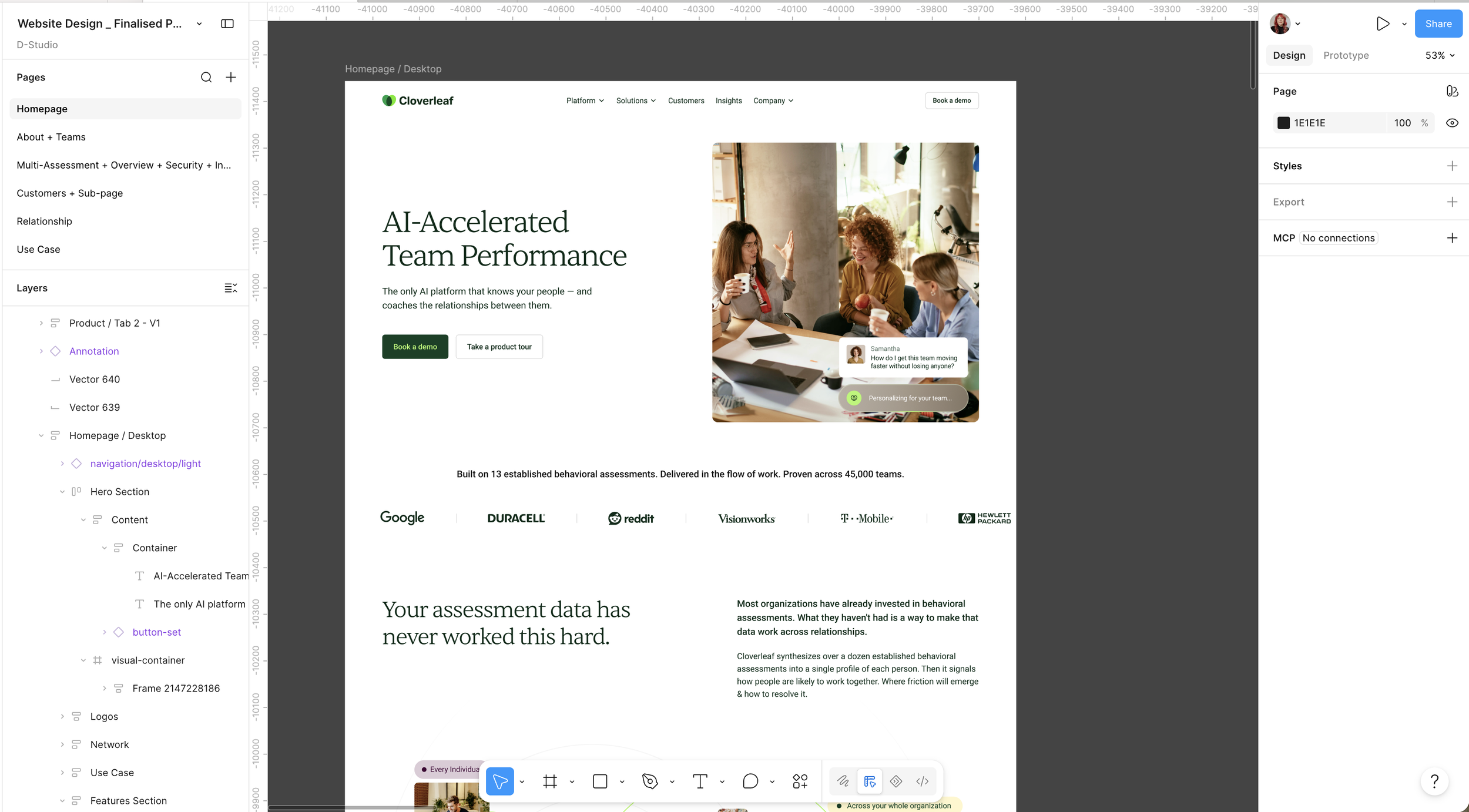
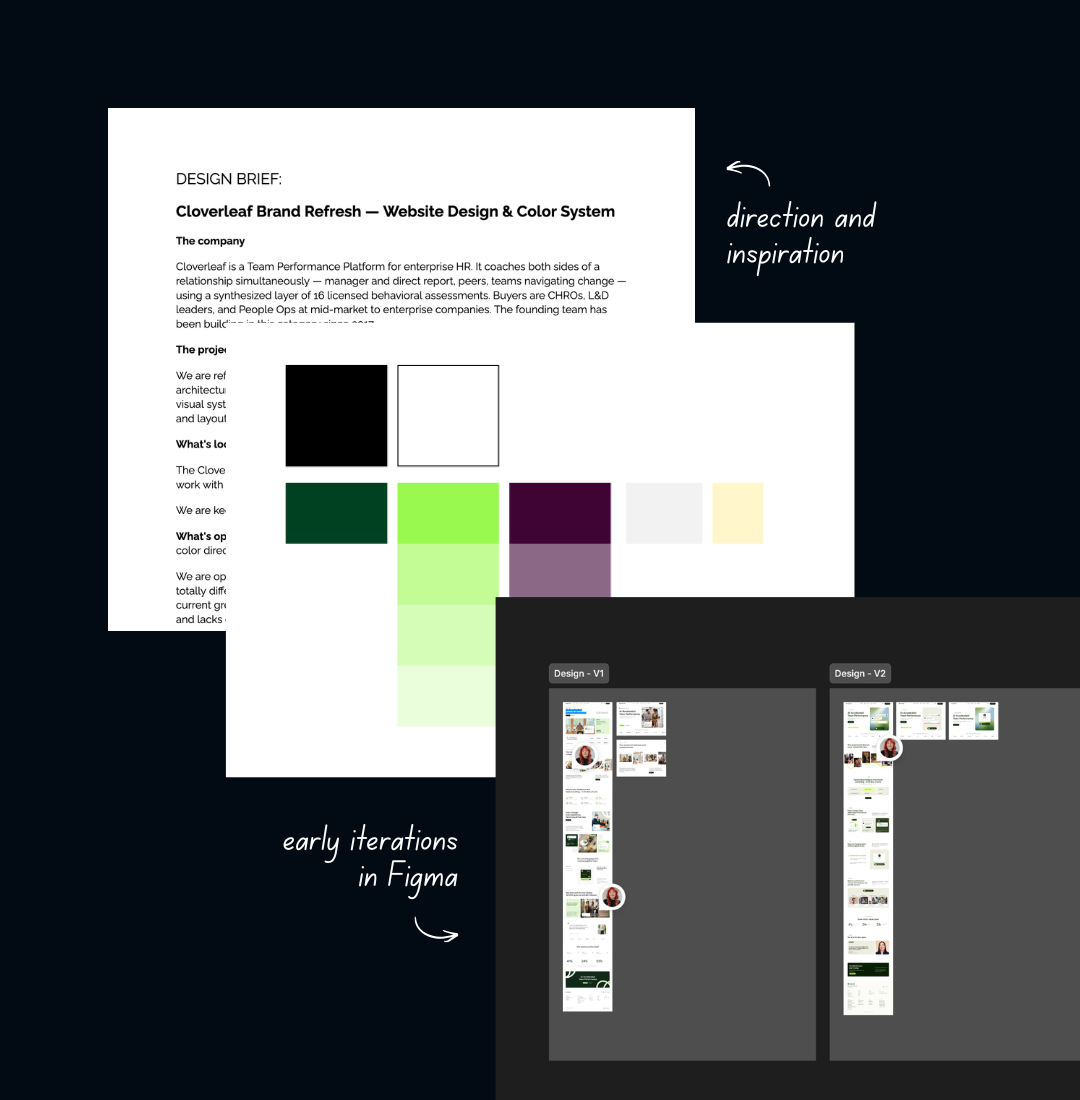
With new positioning in place, we partnered with an external agency to bring the next generation of Cloverleaf's website to life.
Working alongside our Director of Marketing and brand consultant, I helped establish creative direction, provided ongoing design feedback, and managed the agency relationship throughout the process.
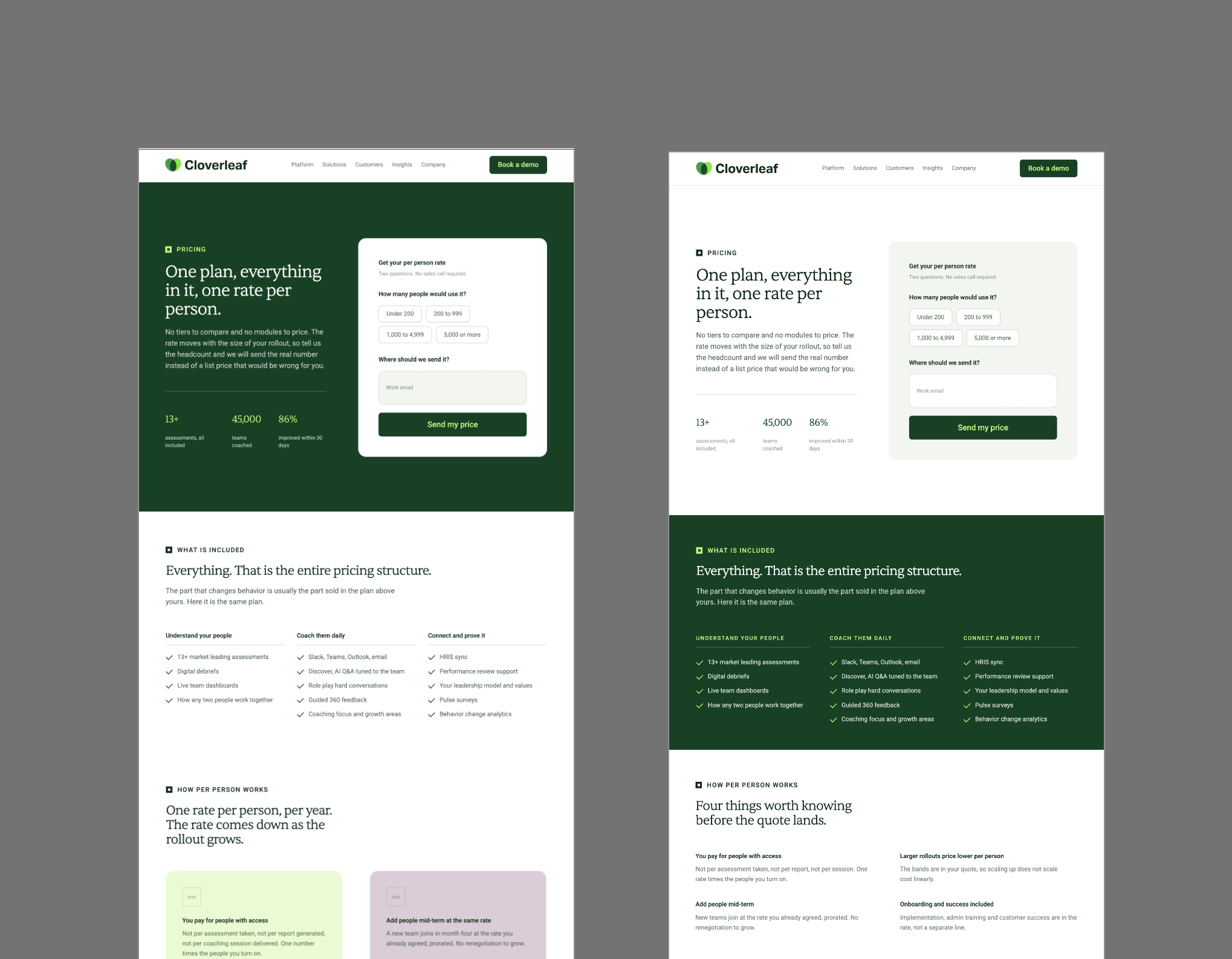
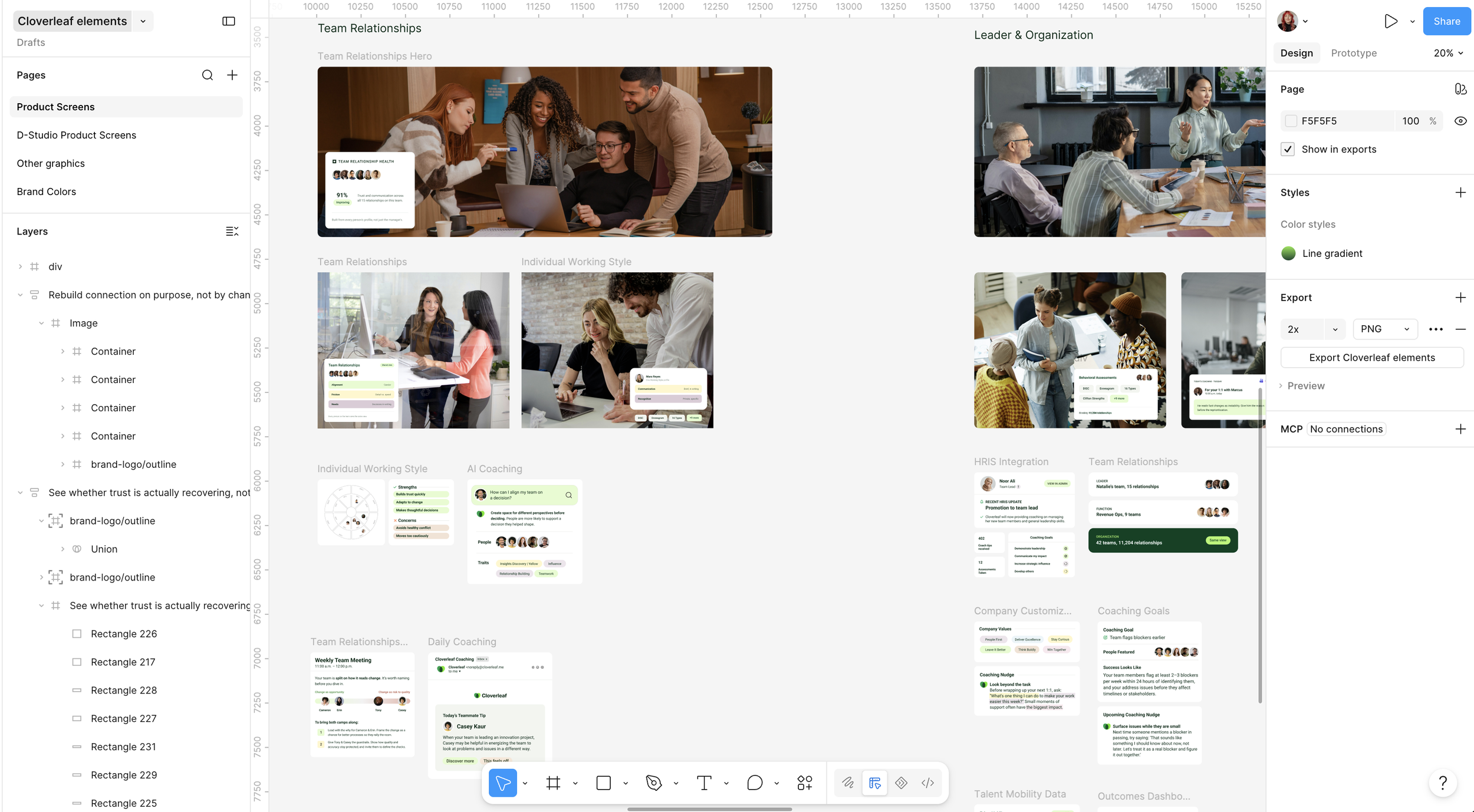
The agency designed and developed 12 core pages for launch, giving us a new foundation for how Cloverleaf looked, moved, and communicated online.
My role wasn't to simply approve what came back.
It was to help connect strategy, brand, and execution throughout the process so the work felt like an evolution of Cloverleaf rather than an agency interpretation of it.
-
Launch wasn't the finish line.
Those first 12 pages established the new visual language, but Cloverleaf's website was much larger.
After launch, I took the reins on extending that system across the rest of the site, redesigning existing pages and creating new experiences that brought the updated brand to life beyond the agency's original scope.
That meant interpreting the new creative system rather than simply copying layouts: understanding its principles well enough to expand it across different content, use cases, and page structures while maintaining a cohesive experience.
What began as 12 redesigned pages became the foundation for an evolving digital system I could continue building from.
AI Creative Systems
-
Leading the brand doesn't mean stepping away from the work.
Alongside setting creative direction and evolving the larger system, I remain a hands-on designer across Cloverleaf's day-to-day marketing. I design experiential and booth graphics, email and landing page experiences, web graphics, campaign creative, sales materials, and the occasional project that doesn't fit neatly into a category.
That hands-on work is also how I keep the brand evolving.
Each new application becomes a chance to test the system in the real world: figuring out where it flexes, where it breaks, and where we can push it somewhere new.
The goal isn't to make everything look the same. It's to make everything feel unmistakably Cloverleaf.
-
A brand system only scales if people can actually use it.
And at a growing company, not every deck, one-pager, internal document, or sales asset can move through the design team.
So I started experimenting with a different solution.
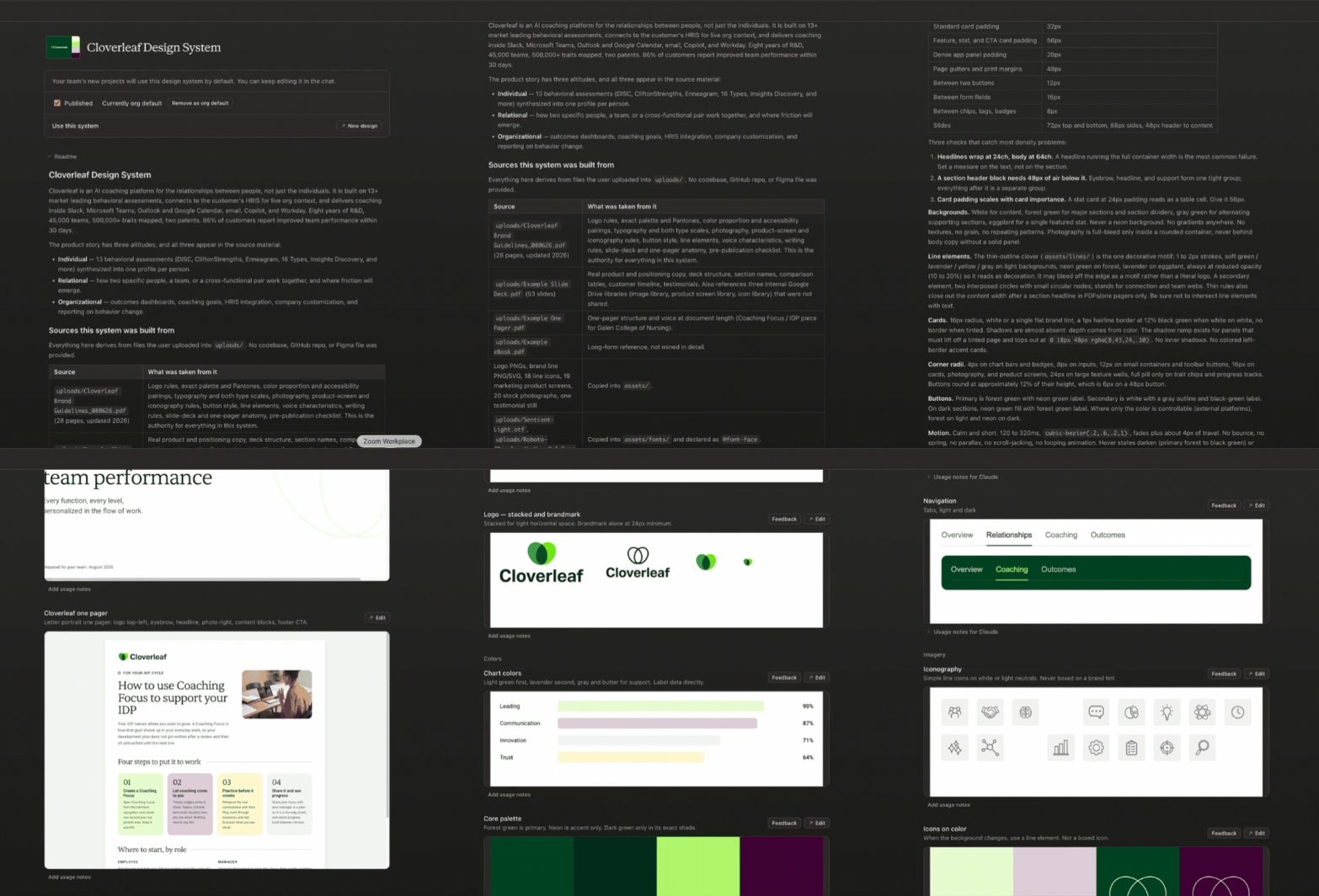
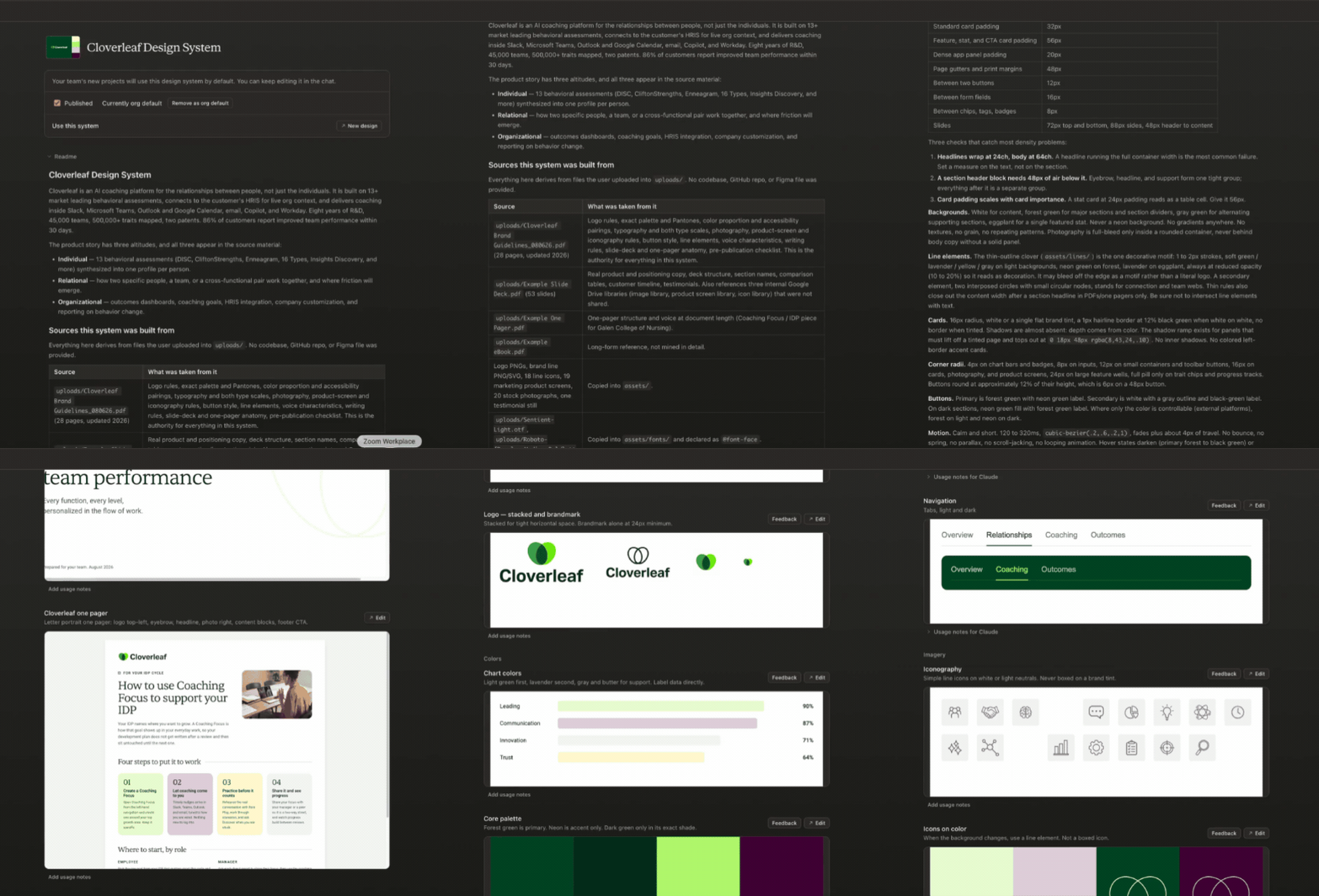
I built a custom Claude skill trained around Cloverleaf's brand system, working iteratively with the model to teach it our visual language, design principles, messaging, and standards.
The goal was to give anyone at Cloverleaf a way to create more on-brand materials independently, from presentations and one-pagers to graphics and other everyday assets, without turning the design team into a bottleneck.
Instead of scaling design by creating more templates, I started scaling the system itself.
-
Creation was only half of the problem.
People also needed a fast way to know whether what they'd made actually felt like Cloverleaf.
So I built a second Claude workflow: a brand grader that evaluates assets against our brand standards and provides immediate feedback.
Together, the tools created a lightweight self-service system:
Create → Evaluate → Refine
That means faster turnaround for the team, fewer small review requests for design, and more consistency across the organization.
More importantly, it turned our brand guidelines from something people reference into something they can interact with.
The Impact
The new brand and website weren't just a visual change.
They helped create a clearer foundation for how Cloverleaf communicated its evolving product and gave the marketing team a system capable of supporting significantly more work.
Following the rollout:
12×
increase in impressions on key marketing pages
6×
improvement in click-through rates across priority campaigns
And beyond those numbers, the brand became easier to scale.
The website could continue evolving after the agency engagement ended. Marketing could create faster without reinventing the visual language each time. And AI-powered tools gave teams across the organization a new way to create and evaluate branded work independently.
Reflections
Here’s what my boss says:
The scope of this project changed my definition of brand design.
At first, the work was about identity: how Cloverleaf should look and feel as the company evolved.
Then it became about direction: aligning internal leadership, external strategy, and an agency partner around a shared creative vision.
And eventually, it became about systems.
How do you build a website that keeps evolving after the agency leaves?
How do you help an entire organization create without sacrificing the brand?
How do you use AI to make a design team more efficient without removing design judgment from the process?
The result is still evolving, which feels appropriate.
Cloverleaf's brand isn't a finished set of assets.
It's a system we've built to keep growing.
“Kendra consistently brings two strengths that have made a real difference for me and the team. First, she has an exceptional ability to juggle a high volume of cross-functional requests without letting anything slip. Even when something high-priority lands at the last minute, she steps in to support it without hesitation or friction. That reliability has taken a lot of pressure off the rest of us and has made cross-team collaboration noticeably smoother. Second, Kendra brings a bigger-picture mindset that the team genuinely benefits from. She's a creative thinker who consistently surfaces ideas and angles the rest of us wouldn't have landed on. For those of us who tend to operate in execution mode, having someone who can zoom out and bring fresh thinking to the table has been incredibly valuable and it pushes our work in directions it wouldn't otherwise go. Together, those two qualities: dependable execution support paired with creative, strategic thinking, make her someone the team relies on heavily, and someone I personally appreciate working with.”