
SELF-BUILT BRAND AND PROTOTYPE
Scoop: Idea to brand and prototype in 48 hours.
Scoop began as a question:
What if customer research felt less like analysis and more like understanding?
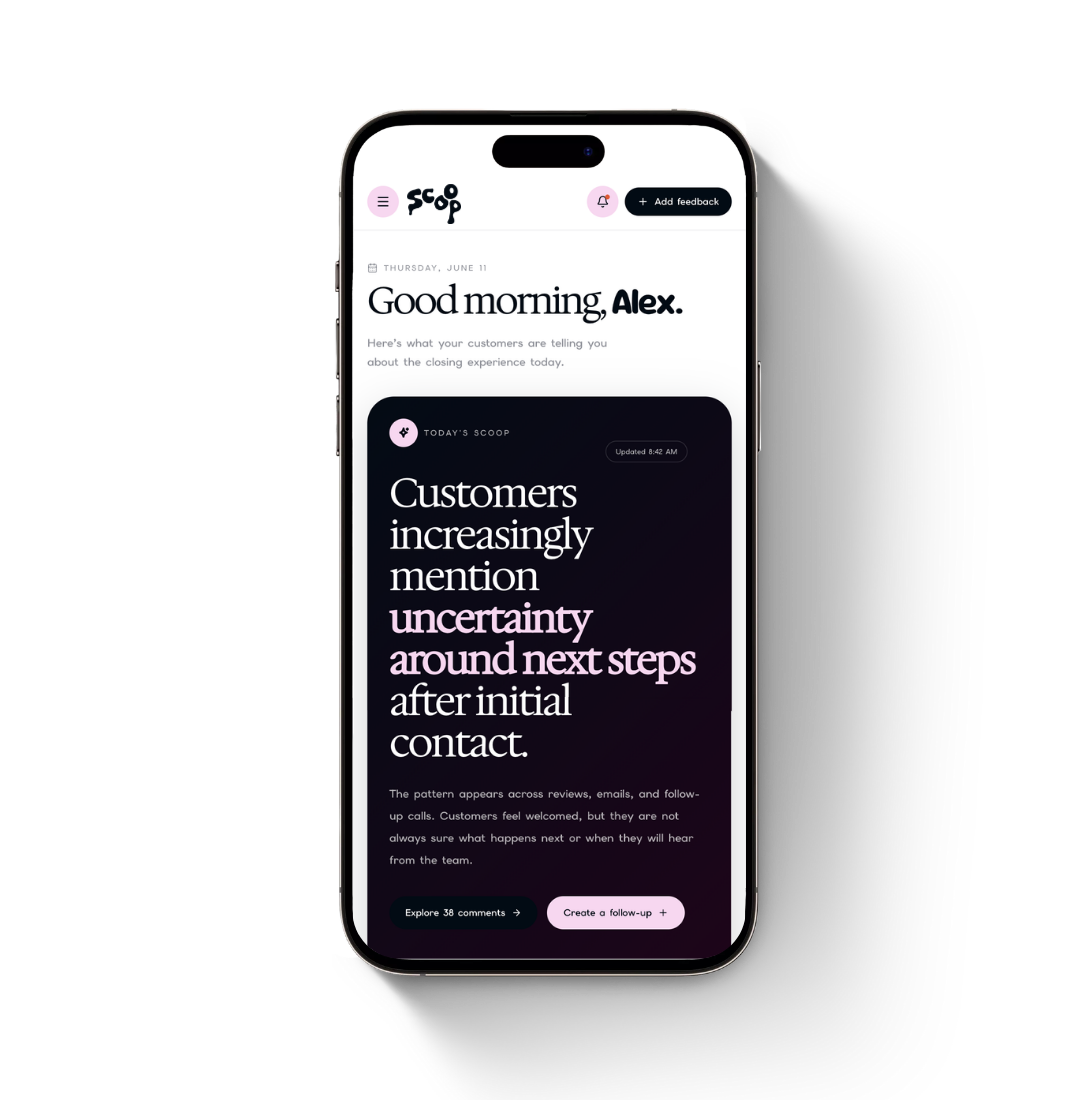
Over two days, I explored that question by building a complete product concept from scratch—developing the positioning, brand identity, interface, prototype, and launch site using a combination of design tools and AI-assisted development workflows.
In the process, the tools accelerated execution, but the thinking still mattered most.
Solo – Brand & product design, creative direction
ROLE
Figma · Adobe Illustrator · Codex · Vercel · GitHub
TOOLS
TIMELINE
Two days
DAY 1
-
Most customer research tools focus on collecting information.
I was more interested in helping teams understand what customers were actually saying.
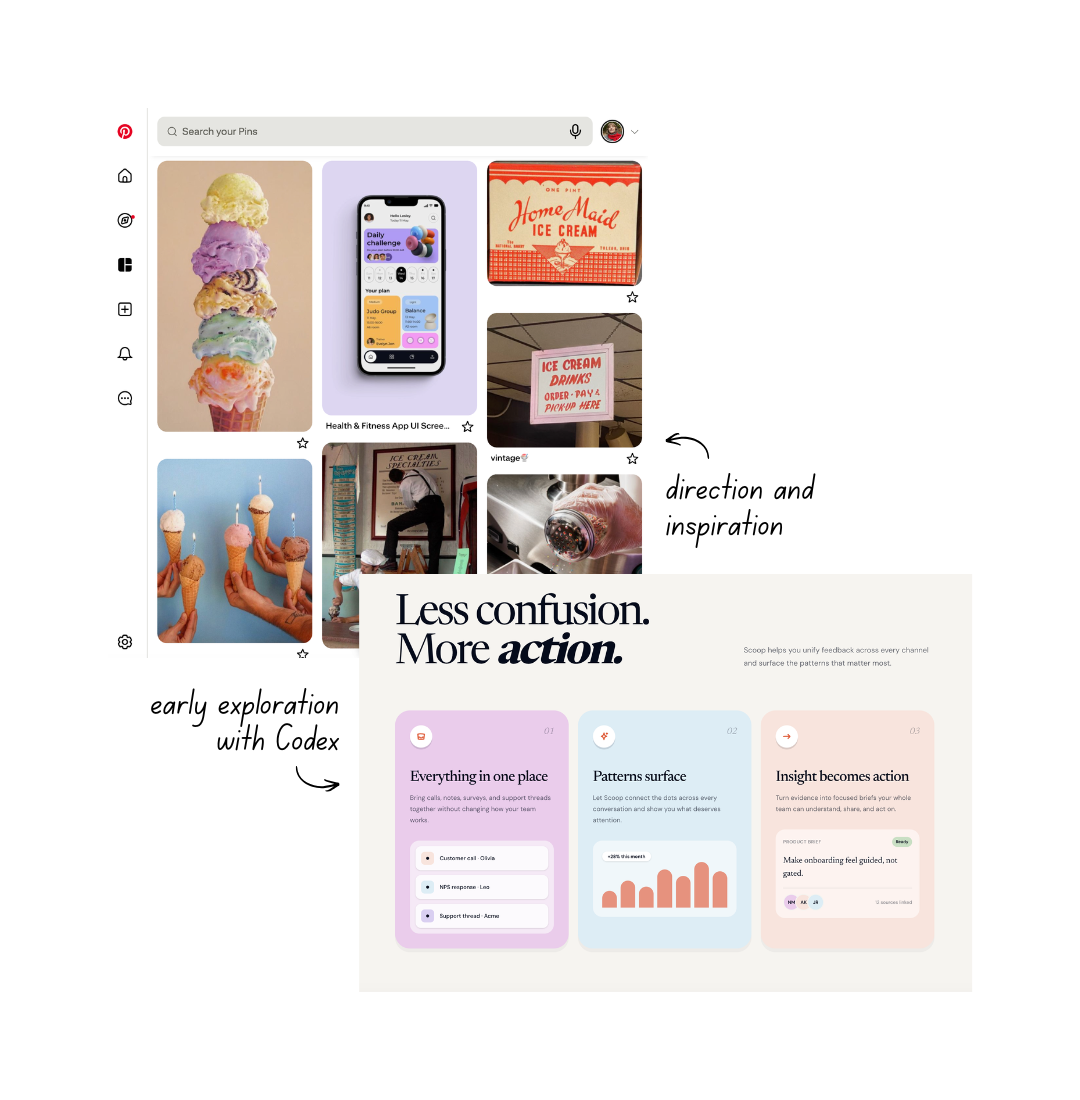
I began by exploring positioning, audiences, and product concepts through rapid conversations with ChatGPT. Instead of treating AI as an answer machine, I used it more like a strategy partner—challenging assumptions, exploring alternatives, and helping identify the strongest direction.
-
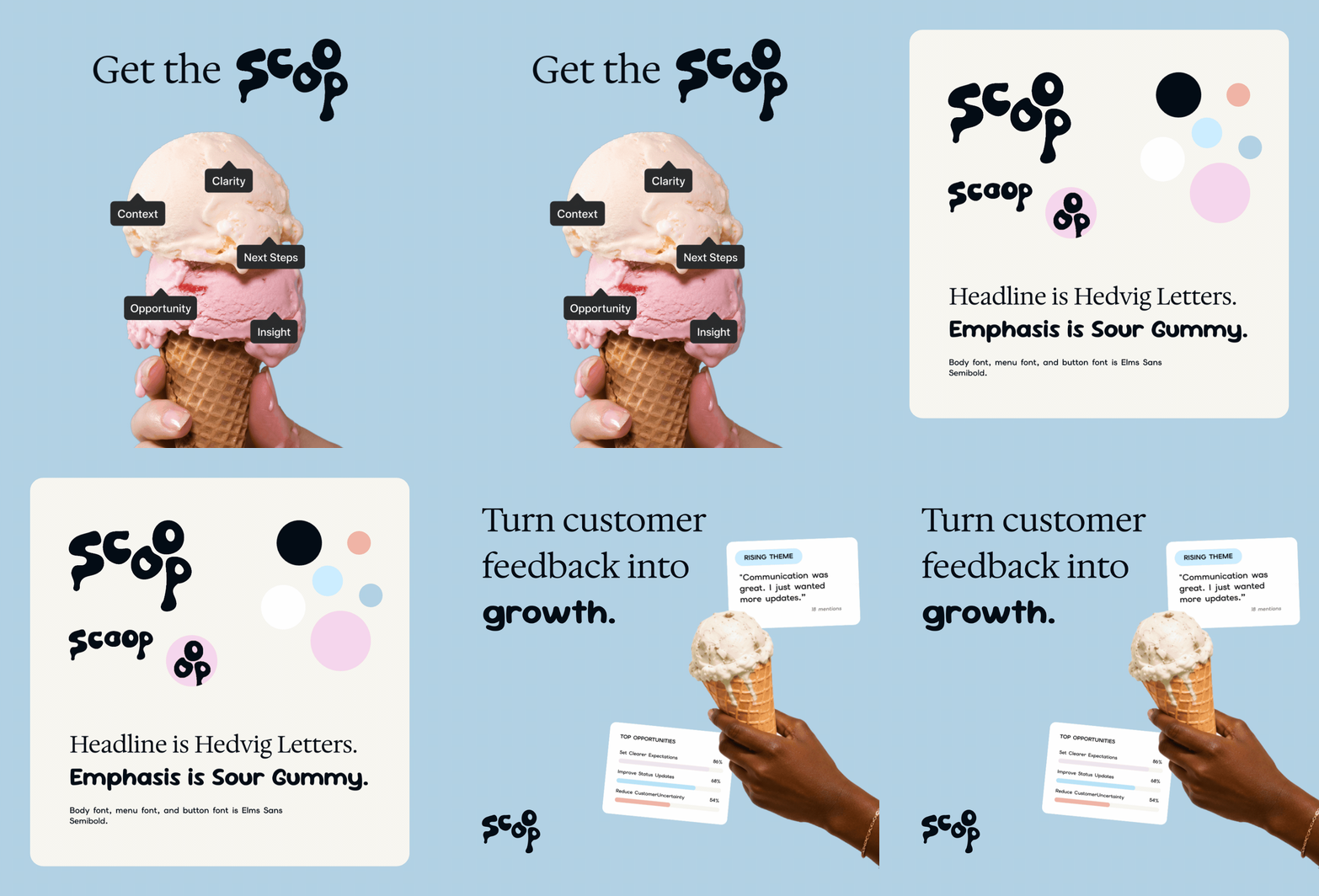
With a direction established, I began creating the visual identity.
The goal was to avoid the cold, analytical aesthetic common in research platforms. Instead, I wanted Scoop to feel curious, approachable, and human.
The visual system was intentionally simple:
Warm neutrals
Soft accent colors
Rounded UI elements
Editorial-inspired typography
Generous whitespace
Together, these choices reinforced the idea that customer understanding should feel approachable rather than overwhelming.
-
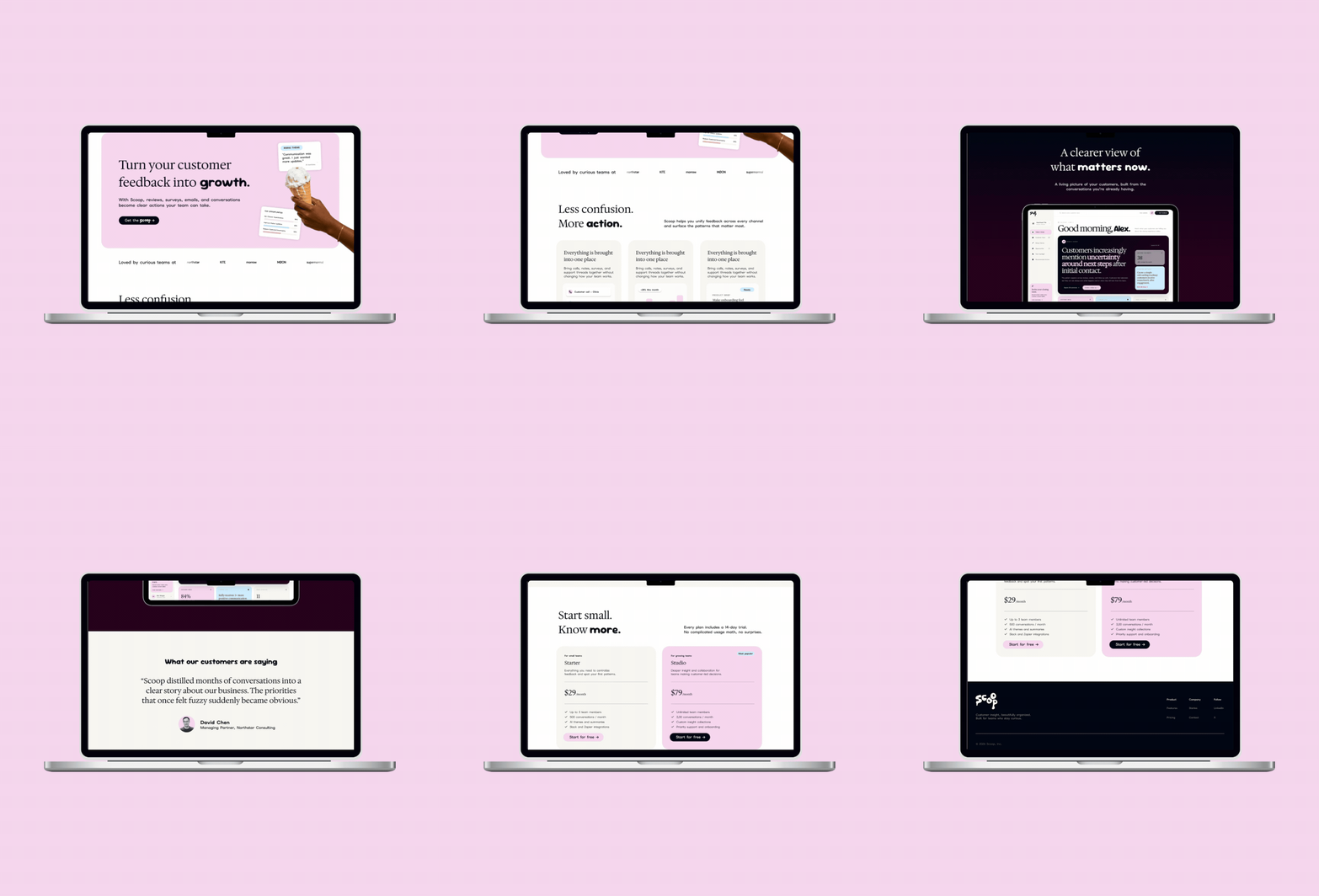
With the brand foundation established, I shifted focus to the website experience.
The challenge wasn't just designing a landing page—it was designing a story for a product that didn't yet exist.
Because Scoop was still a concept, the website needed to do several jobs at once: introduce the problem, communicate the vision, and make the product feel tangible enough that someone could immediately understand its value.
Rather than leading with features, I focused on the transformation Scoop promised: helping teams move from overwhelming volumes of customer feedback to clear, actionable understanding.
The result was a website designed less like a product brochure and more like a guided introduction to the idea behind Scoop.
DAY 2
-
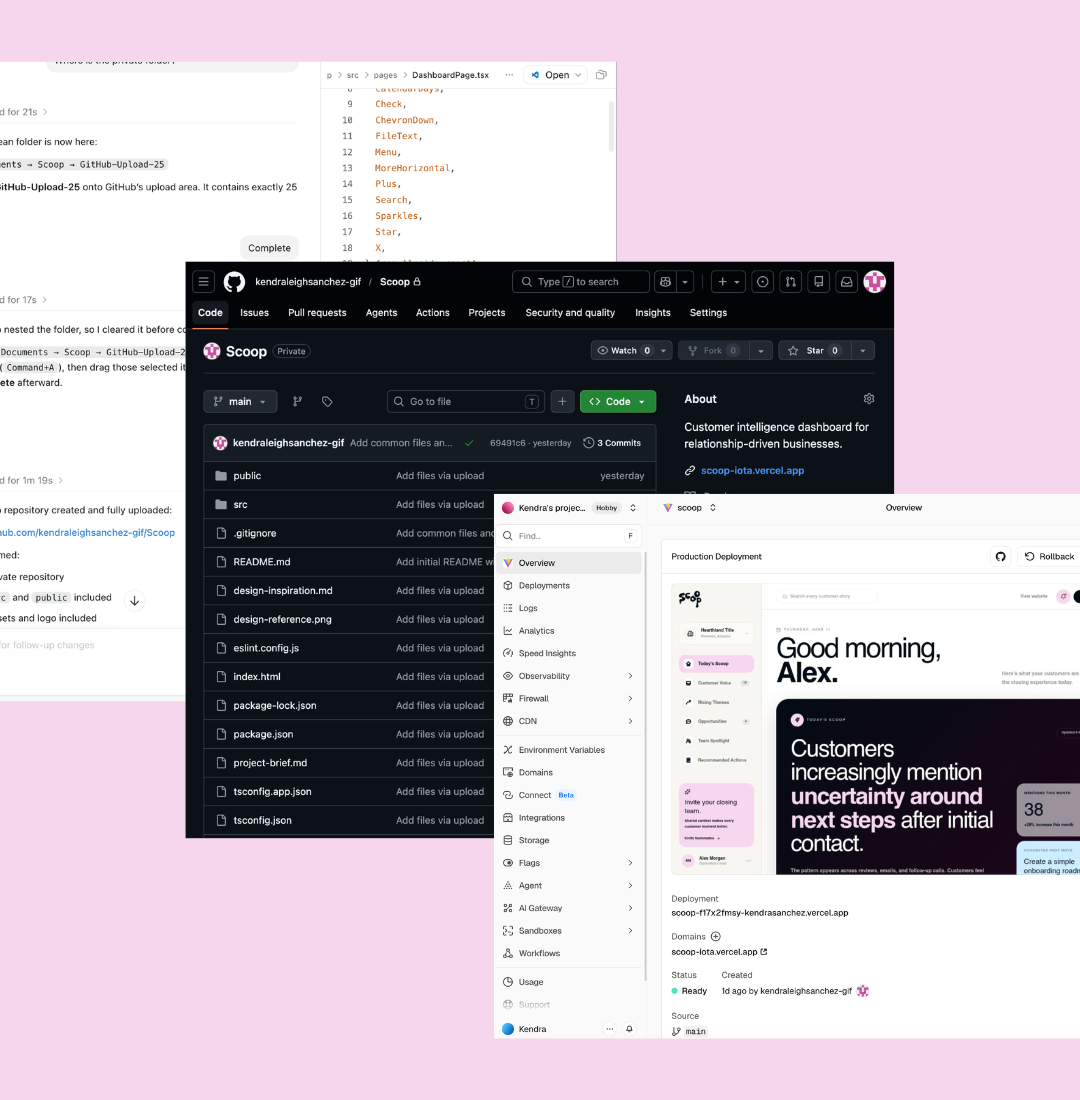
With the web and product direction established, I moved into development.
This project became an experiment in what modern design workflows can look like when designers collaborate directly with AI coding tools.
I used Codex to generate and refine code, GitHub to manage versions, and Vercel to deploy updates continuously.
My role shifted from designer to creative director of the system.
Rather than writing every line of code manually, I focused on:
Defining intent
Reviewing output
Refining interactions
Maintaining quality
Guiding implementation decisions
The process looked something like this:
Idea → Prompt → Prototype → Feedback → Revision
Repeated dozens of times.
-
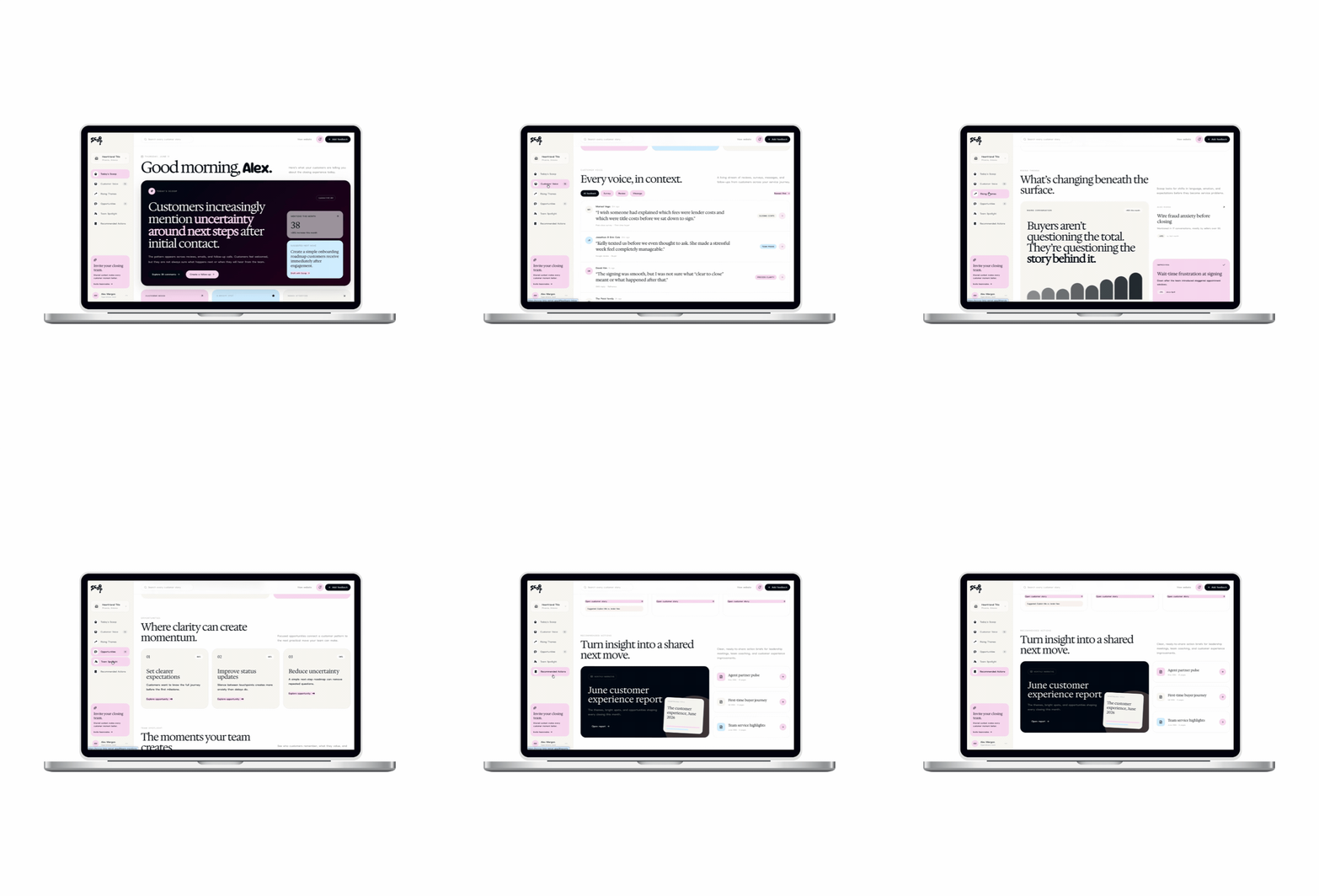
Within 48 hours, Scoop had evolved into:
Product concept
Brand identity
Design system
Interactive prototype
Marketing site
Deployment pipeline
More importantly, it demonstrated how strategy, design, and AI-assisted development can dramatically compress the time between idea and execution.
Reflections
The most interesting part of this project (in addition to speed) was how the role of the designer changed throughout the process. I spent less time producing individual assets and more time directing systems, making decisions, and evaluating outputs. The tools accelerated execution.
The thinking still mattered most.